
Their values are stronger than yours
Our users can smell mealy-mouthed-ness from a mile away.
Justin Duke, Founder & CEO of Buttondown
I was so impressed
Read this About page and weep because it’s bound to be better than yours*.

It’s the About page for Buttondown, the email platform on which this newsletter is hosted. I’m a happy customer. Last month I forked out for a higher tier subscription to let me host and send from a custom domain. (This is the second edition to be sent from phil at lowfalutin dot co dot uk.)
Buttondown’s CEO is Justin Duke (brown beard and mustard sweater in the screenshot above.) He linked to the About page in his annual review email to Buttondown customers. I was so impressed that I replied to say so and to ask a few questions, which he kindly found time to answer. Hence the quotes from him above and below.
I moved to Buttondown from Substack because it suits me better. It suits me better because Buttondown knows what it’s doing and it knows what it’s about. And I like it on both counts. What it believes informs what it does. Its offer is straightforward, and it’s clear why things work the way they do. It’s all coherent and consistent.
I’m a Buttondown customer because it does what I need it to do, and it does it without fuss. I’m a customer because I share its beliefs and I like its style.
Style is the make or break factor when you buy into a relationship with a vendor. I don’t have a Prime account because I don’t want a relationship with Amazon because I detest its style. Style is the public face of culture and values, and it matters. I make a living by advising service brands that haven’t worked this out for themselves. Buttondown has.
Company values are weird
Buttondown’s approach to values is unusual from the get-go. They actually have a point of view on this stuff:
Company values are weird. For one: companies don’t have values, the people who run companies do. But also, company values can change - for better and for worse.
About Buttondown: first paragraph
Values are the things you value. The things you value are made obvious by your choices, by the things you do and don’t do. Humans are deeply intuitive about this stuff. Everyone knows what the values are because they see them play out in front of them every day.
Stress and cynicism abound in most companies because there’s a disconnect - sometimes a brazen, yawning gulf - between the confected values on the About page and the coal-face values that determine what life is actually like for staff and customers. The declared values and the enacted values are miles apart.
The first impressive thing about Buttondown’s About page is that it gets all this and tells the truth about it. The truth is that values come from the top and that values can change.
Values are what they are. They’re not democratically decided in a workshop. You can change your declared values in a workshop, but enacted values only change when the leader changes, by exit or epiphany. Buttondown doesn’t pretend otherwise. Buttondown is straight up.
Better arguable than agreeable
Most values have a tick-box, going-through-the-motions feel to them. Meh. Buttondown wants more than that. It wants its values to be arresting, perhaps even provocative:
We also hope that these values are interesting.
About Buttondown: first sentence, third paragraph
We expect company values to be boring and sterile. We ignore them because they’re inert, in that they have no consequences and trigger no reaction. Sometimes this is by design so that a company can talk about values without the inconvenience of having to live by them.
Sterility usually comes in single words like integrity or inclusion. Values like these are bland because they’re inarguable. The opposite of integrity is untenable, so to talk about integrity is meaningless. Values can’t be active, they don’t work, if they’re too agreeable.
I asked Justin to explain what he means by interesting values and it rests on them being arguable.
Values are only useful to the extent that a reasonable and good-faith person can disagree with them.
Justin Duke, Founder & CEO of Buttondown
Justin talks about customer support to illustrate his point. One of Buttondown’s values is:
Customer support is a critical part of our business.
We understand that for many of you, your mailing list is the single most important part of your business, which is why we'll never force you to deal with an AI-powered chatbot before talking to a human.
As he reads this value again, Justin ponders that it could be better worded to spell out exactly why customer support is critical, and hence why this is an arguable position:
I’m now realizing we can rephrase better as “customer support is a profit center, not a cost center.”
A lot of very reasonable and admirable tech companies do not have this position. They think of the support side of the house as a function to satisfice and ideally automate down to zero entirely. Obviously, I disagree with that view, but I can understand why they might think that — it doesn't require villain-level intent.
Justin Duke, Founder & CEO of Buttondown
This is coherence in action. Buttondown’s values are coherent with its business model.
A business model has two basic components: how value is created and how value is captured. For most tech companies, customer support is a cost centre that needs to be run as efficiently as possible to aid in capturing value. Buttondown sees things differently. Customer support is a means to create value. I can vouch for this. Their customer support is excellent: they’re responsive, no problem is beneath them, they quickly attune to your level of technical nouse and communicate on your level. Sometimes Justin himself will jump on to help out. I feel like I matter. That’s why I stay with them. That’s why I advocate for them. That’s why I happily upgrade and pay them more.
From a commercial point of view, either approach to customer support is valid. Either position is a viable strategic choice. A meaningful value is an arguable value.
Shit-proofing
Brand messaging has three jobs: to inform, to enthuse, and to reassure. When you publish your values they become part of your messaging and they should do these jobs. Buttondown’s values are impressive in all three ways.
Buttondown’s values are written as principles. Each is a line in the sand. Strong principles, credibly expressed, have the power to inform, enthuse, and reassure all at once. Here’s another Buttondown principle:
We are profitable.
We never want to be in a position where our ability to serve you is threatened by our inability to pay our bills. We grow thoughtfully and intentionally in order to maintain our financial stability, so that you can trust us for decades to come.
If you provide a good service and charge a fair price, no one begrudges you making money. People will cheer for you if being profitable means you’ll stick around and not pull the plug on a service they rely on. They’ll whoop and holler if making money from the outset means you won’t ruin everything with shitty monetisation practices down the line. People have had it with enshittification. They’re both enthused and reassured if your commercial principles shit-proof your product.
Shorthand values short-change your business
Only once in my freelance career have I recommended single-word values to a client. They were control, magic, and solidarity. These are not your usual suspects, so they’re interesting for their novelty alone. By and large, though, it’s tough to be interesting and meaningful with single-word values.
Brand strategy is the art of managing meaning and it’s much easier and more effective to manage meaning in phrases or sentences than with single words.
All of Buttondown’s values are written in sentences. This is the longest of them:
Our pricing model needs to be sustainable over the long term.
We want to be able to offer the best possible service to our customers, and we want to be able to do so for decades to come. Part of this means shying away from things that can theoretically grow Buttondown’s user base (such as very generous free plans) because it comes at the cost of our ability to serve all of our customers at a high level.
It’s not poetry. But it’s crystal clear and it’s free of fluff. It has bite because sticking to it involves sacrifice. It reflects a commercial choice and so it’s strategy in company value form. It’s all the things that the vast majority of single-word values aren’t.
The other problem with single-word values is that you’re likely to share them with organisations with which you’d rather not be associated. Shared values equals strange bedfellows. I wrote about this a while back, and I’ve pasted a couple of choice examples below.
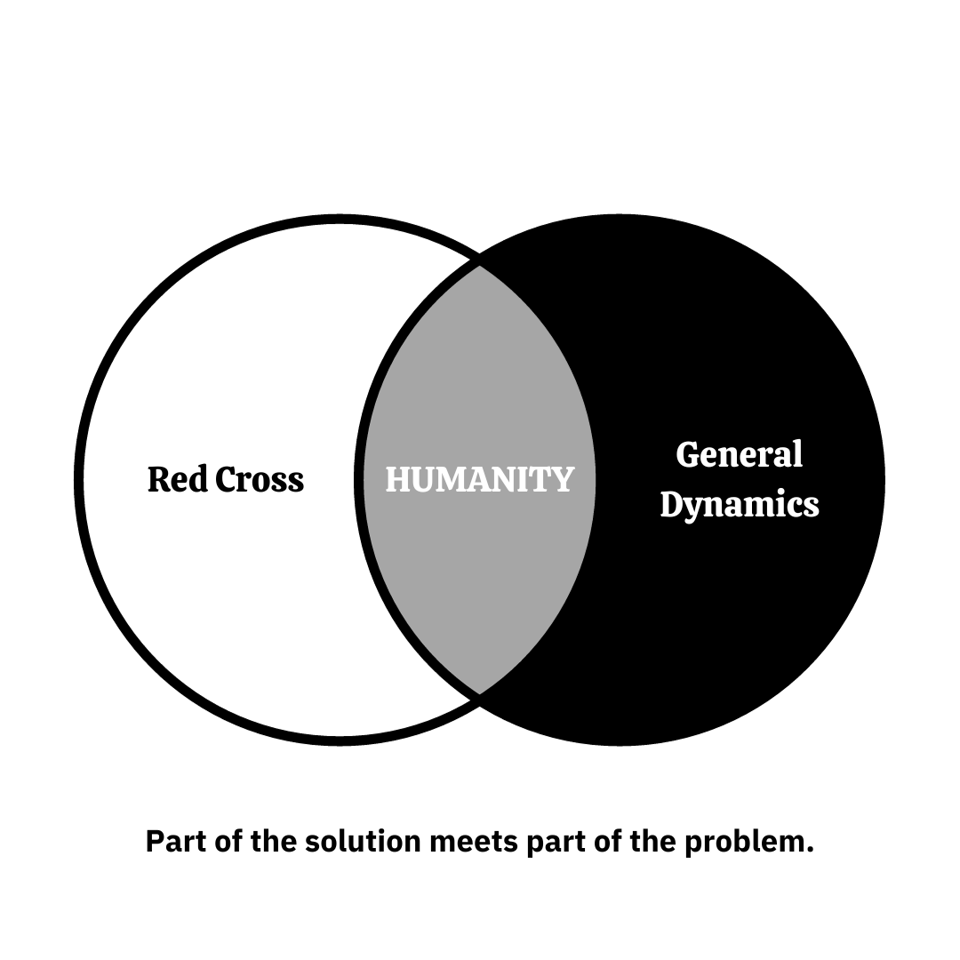
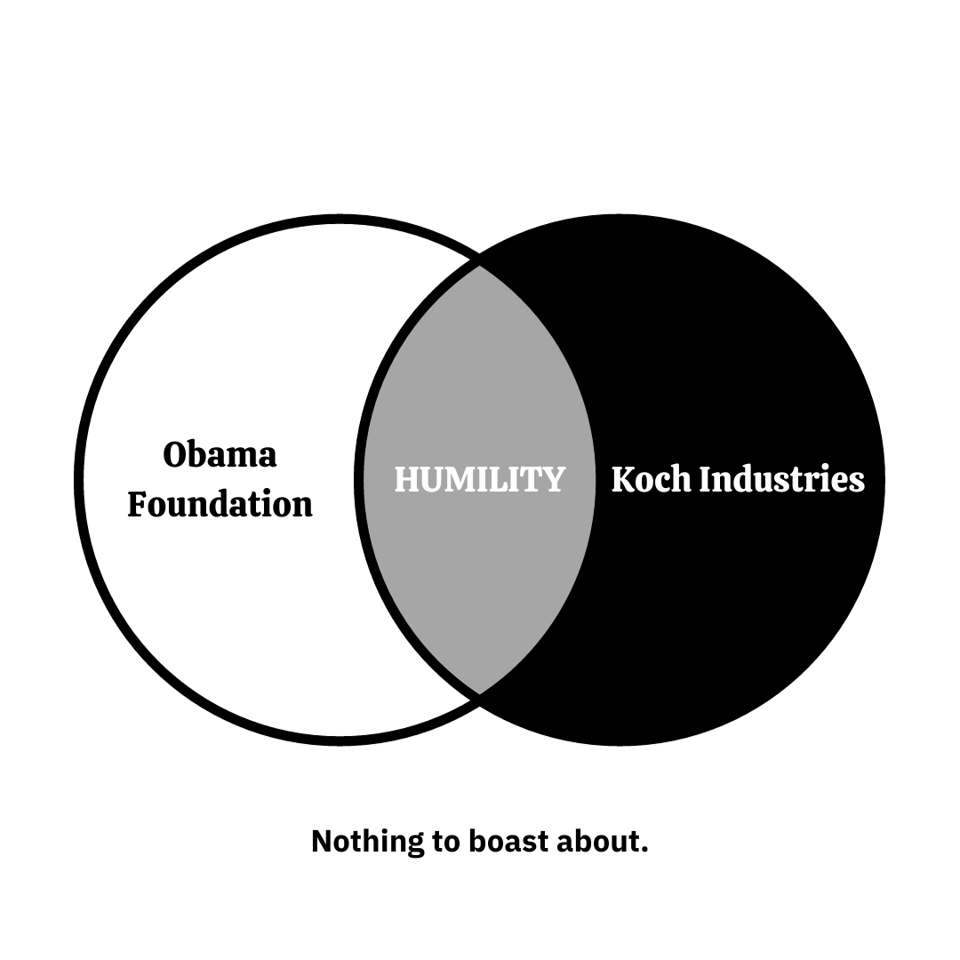
Values with style
Coherence is a boon. Its impact on strategy is multiplicative rather than additive in my experience. It matters that Buttondown’s values are coherent with its business model.
Similarly, it matters that a brand’s style - the way it presents to the world - is coherent with its positioning and its values.
By name and by nature, Buttondown is all about simplicity. By instinct it’s wide open, sometimes radically so. They don’t do “mealy-mouthed-ness”. (A recent blog posts admits that “We don’t know our customers.”)
These characteristics are reflected in Buttondown’s style: the style of its values, the style of its blog posts, the style of its conversations with customers. I suggested to Justin that Buttondown’s style, as I’d experienced it, was “guileless, almost to the point of being unguarded sometimes.” Evidently Justin likes this idea:
Ha, I love guileless and am stealing that for our internal docs.
Justin Duke, Founder & CEO of Buttondown
Buttondown’s style is consistent as well as coherent. It’s consistent despite the fact that just about everyone in the company writes and publishes on its behalf.
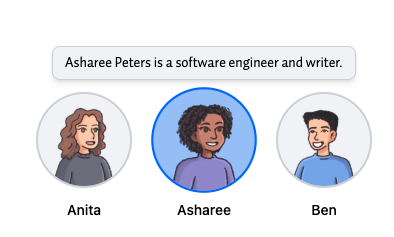
If you hover over the staff caricatures at the top of Buttondown’s About page, it tells you each person’s role at the company. And it’s striking that most of the engineers are also billed as writers. I asked Justin about this:
Before becoming a software engineer, I was an English major. Even now, I spend more time writing prose than code, and this is true of pretty much everyone on the team, regardless of their job description.
Justin Duke, Founder & CEO of Buttondown
Buttondown obviously hires for technical expertise. But, “whilst it hasn’t been intentional or explicit” (Justin again,) they also look for people who are excited about written communication, whether that’s blog posts, documentation, or customer support chat. These enthusiasts are encouraged to write in their own voices and to be as candid as their CEO.
Our house style is, to a certain extent, a lack of house style and more an explicit license to talk naturally and frankly.
Justin Duke, Founder & CEO of Buttondown
It shows and it works.
Frank to the finish
Coherent and consistent, stylish and specific: Buttondown’s values are frankly stronger than yours*.
*Unless you’re one of my clients 😉.
Add a comment: