
The fine art of surfacing
Detective work and creative work
Brand strategy is detective work followed by creative work. First find the truth. Then tell it in the most compelling way in the most conducive places.
When a brand tells its truth with singular style, it’s irresistible.
And that’s the thing about the irresistible truth; it’s undeniably true. The job of a brand strategist is to make sense of things, not to make them up. Brand strategy isn’t fiction. It’s revelation. It’s poking around in the right places and asking the right questions so that the truth reveals itself.
The truth gives buoyancy to a brand. And you can use that buoyancy in your strategy work. The truth will rise to the surface if you let it.
Brand strategy detective work is the “fine art of surfacing”.
The Fine Art of Surfacing is an underrated new-wave album by The Boomtown Rats. And it’s an underrated philosophical approach to brand strategy. It’s such an apposite phrase for what I do that I bought an image licence from Alamy, and not just for this newsletter. It might end up on a workshop T-shirt too.
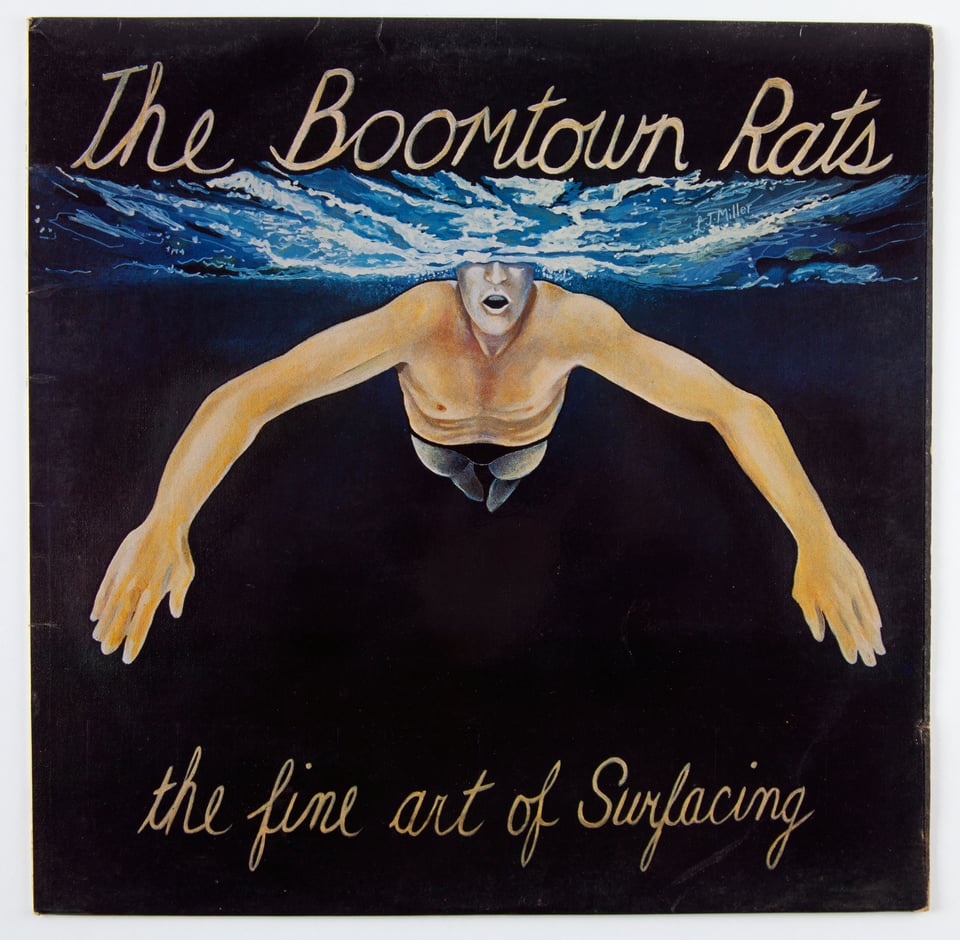
The fine art of surfacing is less of a process and more of a knack.
The fine art of lap-landing
A good detective makes way for the truth. Brand strategy detective work is very much a good cop routine: lots of patience, encouragement, and sympathetic curiosity.
Good interview technique creates a path of least resistance for the truth to bubble up. You have to manage the tension between tightly-defined objectives and the fluid, organic kind of conversation that gives you the best chance of achieving them. Have a discussion guide but don’t be bound by it. Be happy to go off piste if it feels like you’re heading into fertile territory. Trust your interviewee to know what needs to be said. Let them lead if they know where to take the conversation.
It strikes me that modern work gives people precious little opportunity to think out loud or mull things over. Perhaps that’s why people often say that talking to me is therapeutic. They seem to trust me. And I give them rare space to reflect, opine, or pontificate. I have no issue with people pontificating if they’re giving me what I need. I guess any good detective would say the same. Don’t interrupt if your witness starts to sing like a canary.
Detective work and creative work; most often the truth rises to the surface in crude form. And the creative work is the process of refining and distilling it into something that’s pure and compact, instructive and inspirational.
But occasionally an interviewee does the creative work for you. Something wonderful happens and the truth doesn’t just rise to the surface, it lands in your lap, fully-formed and finely polished, like a perfectly round and glassy meteorite landing in your garden.
This happened to me just last year. I interviewed my client’s CMO. It was billed as a stakeholder interview, but soothsayer interview would have been more appropriate. They said something that I later presented back, verbatim, as the new brand proposition. Neither of us realised the significance of what they’d said at the time. I could hear us failing to cotton on when I played the interview back. We treated it like a throwaway comment. My listening is good when I’m interviewing but it’s not perfect. You’re managing the minutes and thinking on your feet about when to probe, how to probe, or about what to ask next. You can miss something important in the moment. Recording the conversation gives you a second chance. In this case the truth hit me when I listened back to the recording. Fifty-seven minutes into a fifty-nine minute conversation, there it was, the key to the whole project.
My transcription software nags me to use its LLM summary function, which I didn’t ask for and don’t want. It’s needy, which is just as unattractive in a so-called AI as it is in a human being. I make a point of ignoring LLM summaries. I’d turn them off if I could. But on this occasion I looked to see whether the truth had jumped out at the LLM as it had to me. It hadn’t. The LLM had missed it completely. Doing the job properly by replaying the whole interview saved me a lot of work. Being lazy and abdicating to the LLM would have been worse than inefficient, it would have been a failure.
This is the fine art of lap-landing, which is like having a black belt in the fine art of surfacing. I don’t deny the serendipity in that conversation. But it’s also fair to say that the way I managed the previous fifty-six minutes made the serendipity of the fifty-seventh more likely. There were probes and pauses, nods and nudges, that got us from warm, warmer, very warm to hot, hotter, red hot. The truth doesn’t land in any old lap. And it’s more likely to land in an old lap than a young one. Take heed, grasshopper.
Someone’s listening to you
The Boomtown Rats released The Fine Art of Surfacing in 1979. The most famous track on the album is I Don’t Like Mondays, about a mass shooting in an elementary school in America earlier that year. Plus ca change…
However, Track 1 on Side A is Someone’s Looking At You. The song is a perfect vehicle for Bob Geldof’s persona. The lyrics are agitated and splenetic. Pressure builds through the verses. Geldof winds himself up until the chorus rages out of him like a geyser. His truth surfaces with rebel vehemence.
And I wish you'd stop whispering.
Don't flatter yourself, nobody's listening.
Still it makes me nervous, those things you say.
You may as well
Shout it from the roof
Scream it from your lungs
Spit it from your mouth
There's a spy in the sky
There's a noise on the wire
There's a tap on the line
And for every paranoid's desire...There's always someone looking at you.
S-s-s-s-someone looking at you...
They're always looking at you.Someone’s Looking At You, The Boomtown Rats
My truth is the opposite of his. Don’t flatter yourself, nobody’s listening, he says. Me, I’m listening intently. I’m listening in full and at least two times.
-
Nicely done. 'Detective work'.
-
↳ In reply to Eaon Pritchard
Thanks Eaon. Hopefully we can make our paths cross before too long, now that you’re firmly back in Scotland.
-
This is how I have always worked, too - and I don’t intend changing it! (Brand) Truth is like happiness - the more you chase it, the more elusive it becomes.
-
↳ In reply to Sue Imgrund
Hi Sue. Thanks for taking the time to comment. I’m glad we see eye to eye on this!
-
Brilliant. Sadly, you don't pick up quite the same subtleties in online conversations. Nothing beats a wander around the factory floor or a long walk with the CEO. Insights are there if as you say you keep your eyes and your ears open.
-
↳ In reply to john
Hi John. Thanks for that. 100% agree about spending time in situ and in person. It’s a serendipity multiplier.
Add a comment: