
The brandrunner
Feel the zeal
Not every CEO is a leader. The ones I’ve worked with who are, they all obsess about culture. They fixate on culture with the same zeal that a TV showrunner fixates on tone. And boy, do showrunners fixate on tone. If a showrunner has one job, it’s tone.
Jesse Armstrong, the showrunner for Succession and Veep, was the castaway on Desert Island Discs recently:
That's, I guess, what the showrunner role is; somebody who's trying to protect or create that tone.
Jesse Armstrong, Desert Island Discs, 16th January 2026
He often repeats himself on this topic:
Tone is the elusive thing that I chase... It's quite a problem at the heart of your project if it doesn't have a consistent tone…
Jesse Armstrong, In Writing with Hattie Crisell, 6th December 2024
One more time with a little more of that showrunner zeal:
The hardest thing to get right in any work of art, and certainly in a TV show, the single most essential and ineffable thing you’re looking for is a tone. A good tone in a show helps so much else: from the big stuff (its perspective) to the practical stuff (the cast).
Jesse Armstrong, Writing America From the Outside, New Statesman, 22nd May 2024
Armstrong knows that he attracts and keeps an audience - that he lives or dies - by nailing the tone of his shows.
Russell T Davies (Doctor Who, Queer as Folk, It’s a Sin) is the same. To say he sweats the small stuff is an understatement. This is him corresponding with Benjamin Cook for their book about the writing of Doctor Who:
Above all, tone comes from the script. You get 57 dozen people working on a drama, at key stages, and they all wander off. No, it's not fair to call it wandering, because they're creative people, they're employed to use their imaginations, but everyone creates in a slightly different way, sometimes in a radically different way. The director, the producer, the design teams, etc, should be interpreting the show in the same way, so the script should contain convey the tone in every adjective, in the layout of its pages, in the names of its characters; everything should transmit the tone... All the smaller stuff - the words, the names, the style, - conspire together to make a show that works, or a show that doesn't.
Russell T Davies, The Writer’s Tale
Tone is vital, tone is hard to manage, and tone is hard to describe in words. It’s a high-importance, low-fidelity concept. It only works if you’re a tone zealot, if you’re on it and all over it, all of the time. It’s why showrunners earn the big bucks.
Here’s Russell T Davies again, talking about why he went to war with his production team over the colour of an alien’s eyes:
Of course, that’s a tiny example, but that’s what we’re talking about, a whole string of tiny examples, which gather together to form the whole. If it’s not controlled, you end up with a mess.
Russell T Davies, The Writer’s Tale
To be a brandrunner
CEOs take note. You’re in the same boat. Only culture instead of tone. You attract and keep customers - you live or die - by nailing the culture of your business.
This is especially true if you have relationships with your customers rather than just transactions. Whatever your company does, you’re in the relationship business. So your one job as CEO is culture. Your customers keep buying and keep referring because of your culture, because of your style. You invoice for what you do. But your customers buy how you do it. Affinity comes from the how not the what.
That’s why, for my money, this analogy between a CEO and a showrunner is almost perfect. To be an effective CEO is, in large part, to be a “brandrunner”. You’re a zealot about culture. And about strategy for that matter. You model culture and strategy through your behaviour. And you bang on about both, way beyond the point of boring yourself. You don’t let tiny deviations or least-resistance accommodations poison the endeavour.
The how has to come from the top. This has been the topic of a couple of recent newsletters. I interviewed Justin Duke, the CEO of Buttondown (the platform for this newsletter) about his assertion that “companies don’t have values, the people who run companies do.” And I wrote about Kevin Rountree, the CEO of Games Workshop, bringing style and personality to the company’s half-year report. They are both brandrunners.
Relentless intent
The showrunner is a visionary. They set the tone of a show. But they also have to delegate to, and collaborate with, a large team of super-talented, highly-opinionated specialists to execute it. That will sound familiar to any CEO.
Showrunners manage by intent. Wittingly or not, they are proponents of the David Marquet school of leadership. And they transmit their intent by over-communicating. There’s a showrunner meeting, a ritual, which is dedicated to transferring and committing to a shared intent. It does what it says on the tin. It’s the tone meeting.
If the showrunner’s intent is lost in production, you can’t fix it in the edit. Here’s one of the editors of Better Call Saul talking on the Better Call Saul Insider podcast about the importance of tone meetings:
The importance of the tone meeting; you can't stress it enough. Because, being on the other side of that, if you're on something where they didn't tone it well enough or hard enough, the footage gets to the cutting room, you're cutting it together, and then you're working with the producers, and they say:
- What is this? Why don't I have that moment? Let’s go to reverse.
- There is no reverse.
- What do you mean, there's no reverse?And that's one of the reasons why a show - a Better Call Saul or a Breaking Bad - even though the styles [of individual episodes, scenes, or shots] can vary wildly, there's a unity to it, because there is a common vision that is being expressed and communicated, which is the key word, “communication”. It’s like a brand recognition. It makes it seem like it's a part of the same thing, and it's so important.
Chris McCaleb, Editor, Better Call Saul Insider podcast, Season 3, Episode 7, 23rd May 2017
Note his use of the word brand. Tone is what makes a brand out of a show. And culture/style is what makes a brand out of your business.
Tone meetings go on for hours. They’re attended by the showrunner, the writers, the producer, the director, the DoP, and any other crew member with creative input. And they painstakingly run through every scene, every prop, every camera angle, even the choice of lenses, to make sure that the intended tone is realised on set or on location. No one leaves until the tone is understood, committed to, and hardwired into the production.
At the risk of over-egging the importance of turning intent into committed, coordinated action, this is the A-Camera Operator for Season 3 of White Lotus:
At the beginning of Season 3, Ben [Kutchin, Cinematographer] had a tone meeting with all of us. He sat down the operators, the ACs, and the heads of departments, and had a long tone meeting with a lot of references. He made a very interesting grab bag of lenses, and he used certain lenses for certain emotional scenes so we would know to be looking out for scenes to shoot with those specific lenses. That was different from the other two seasons where we kind of found it as we went along. He came in with strong intentions, and I think that shows in the season. It’s beautiful, it’s painterly. It’s very calculated.
Frank Larson, Camera Operator for White Lotus, Cinematography World, 26th August 2025
They tone it real hard
Intent is fine, but it has to survive contact with the real world. It has to survive contact with those super-talented, highly-opinionated specialists. That goes for the indended tone of a TV show. It goes for the culture of a business.
A showrunner has to have the the doggedness to go with their vision. There will be hundreds of very good reasons - the tiny examples that Russell T Davies talks about above - why specific aspects of their intent can’t be executed if everyone’s (entirely reasonable) concerns are listened to. You have to be unreasonable if you want to make something great, and that includes Doctor Who:
This is what tone meetings are: everyone is gathered together in an almost wholly airless room at the BBC in Cardiff. We have the heads of make-up, costume, photography, lighting, practical effects, publicity, prosthetics, personnel, and representatives from an independent special effects company, The Mill. Everyone is gathered around a gigantic conference table. Here, tea is drunk, a box of sad-looking doughnuts is attacked, and industry chit-chat is made. Then, one by one, every head of department explains why the show can’t actually be made.
Behind the scenes of the Doctor Who Christmas Special, starring Kylie, The Times*, 15th December 2007
*If you don’t have a subscription to The Times, the article has been republished in full here on the David Tennant Updates site.
The successful showrunner has to move the team from a position of “this is why we can’t” to a position of “here’s how we can,” without undermining anyone’s dignity, but also without diluting their intent. The same obviously goes for an effective business leader.
When the makers of Better Caul Saul start talking on the podcast about tone meetings that can last ten hours over two days, Kelly Dixon, a senior editor on the show, chimes in with, “They tone it real hard.”
People who make great shows, and CEOs who build great brands by creating great cultures: they tone it real hard.
That said…
Control freaks who are able to let go
Successful showrunners and effective CEOs surround themselves with top-notch talent. The kind of people who have a lot to offer, but only if they’re given room and freedom to do their thing.
The directors have to be independent artists. We want them to be as aware as possible of what we have in mind. But there’s a certain point where they’re the ones who are responsible for putting the show on film. And so at some point we have to relinquish control; reluctantly, because Vince [Gilligan, creator of Breaking Bad and Better Call Saul] and I, we’re all control freaks. But at a certain point you have to let people do their thing. If we try to control things too much, then there’s no feeling of creativity.
Peter Gould, Writer, Director & Co-Creator of Better Call Saul, Better Call Saul Insider podcast, Season 3, Episode 7, 23rd May 2017
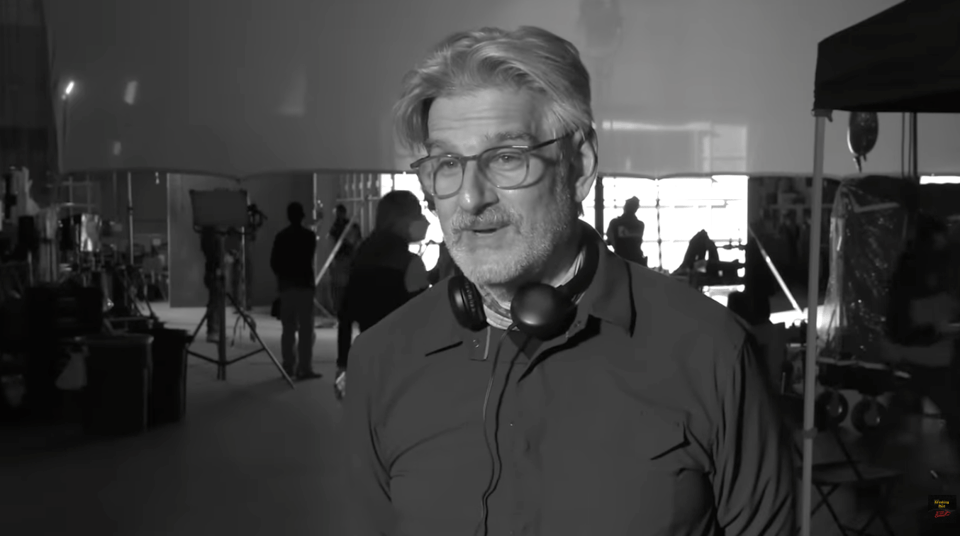
Good showrunners and good CEOs are control freaks who can also let go. And the secret to managing this apparent contradiction is over-committing to shared intent.
I said to people, thank you for all the things you've done that I've never asked you to do. So a lot of wonderful things happened. I provide a frame or a box within which we exist and operate. And I'm very clear on why we exist. But I'm not clear on what you should be doing. You should surprise me. If you only do what I told you to do, that's going to be pretty boring.
Jørgen Vig Knudstorp, CEO of Lego, Wisdom From The Top podcast, 6th October 2021
What I do is I put people together. And you have a vision. I have ideas, and I think of ideas, but I can't personally execute them. That's why you have to surround yourself by brilliant people that can take your idea and prove it and put it out into the world.
I like to really surround myself as much as possible with creative people that challenge me. And I also like to try and create an atmosphere at Condé Nast whereby people feel there is possibility for leadership.Anna Wintour, Global Editorial Director of Vogue & Chief Content Officer at Condé Nast, The Rest is Politics Leading, 8th December 2025
Leaders like Knudstorp and Wintour don’t just transfer their intent for culture by talking about it. They “tone it real hard” by doing culture and being culture role models. (Whilst banging on about it at every opportunity too.)
Soft things you have to be hard about
The tone of a TV show, the culture of a business, the style of a brand; these are soft things that you have to be hard about.
Every good showrunner knows it. As a brandrunner, every good CEO should know it too.
Just before I published this, my ex-colleague Jim Carroll posted this: My Captain Birdseye Incident. It’s a funny anecdote with a serious point to make about managing the gap between your intent and their perception. He didn’t tone it hard enough.
Add a comment: