
Living in harmony, with a friendly enemy
In which there’s more to working with ideas than having them.
Also I didn’t mean to go off on one about Dave Trott when I started. I must have been enjoying myself.
Trott’s brush
I like Dave Trott’s style. He keeps things radically simple. He’s lower than lowfalutin. He’s nofalutin. I’m a fan.
I like how he’s in touch with his audience. He talks about “punters” with respect and affection. And he made his name by writing catchy ads with the common touch. I wish I’d got to work with him.
On LinkedIn, his no-nonsense approach, storytelling flair, and trademark format (the oft-imitated single-sentence paragraphs) leap out on a platform where most people have none of those things. He’s in touch with his audience on there too, but more sparing with the respect and affection.
Trott self-consciously positions himself against the bullshit blah-blah that’s made marketing, advertising, and most other things about business worse than they used to be. And he plays to his working class background. He sets his streetwise nouse against the MBA speak of marketing and the Oxbridge stereotype of agency planners. They’re his pantomime villains.
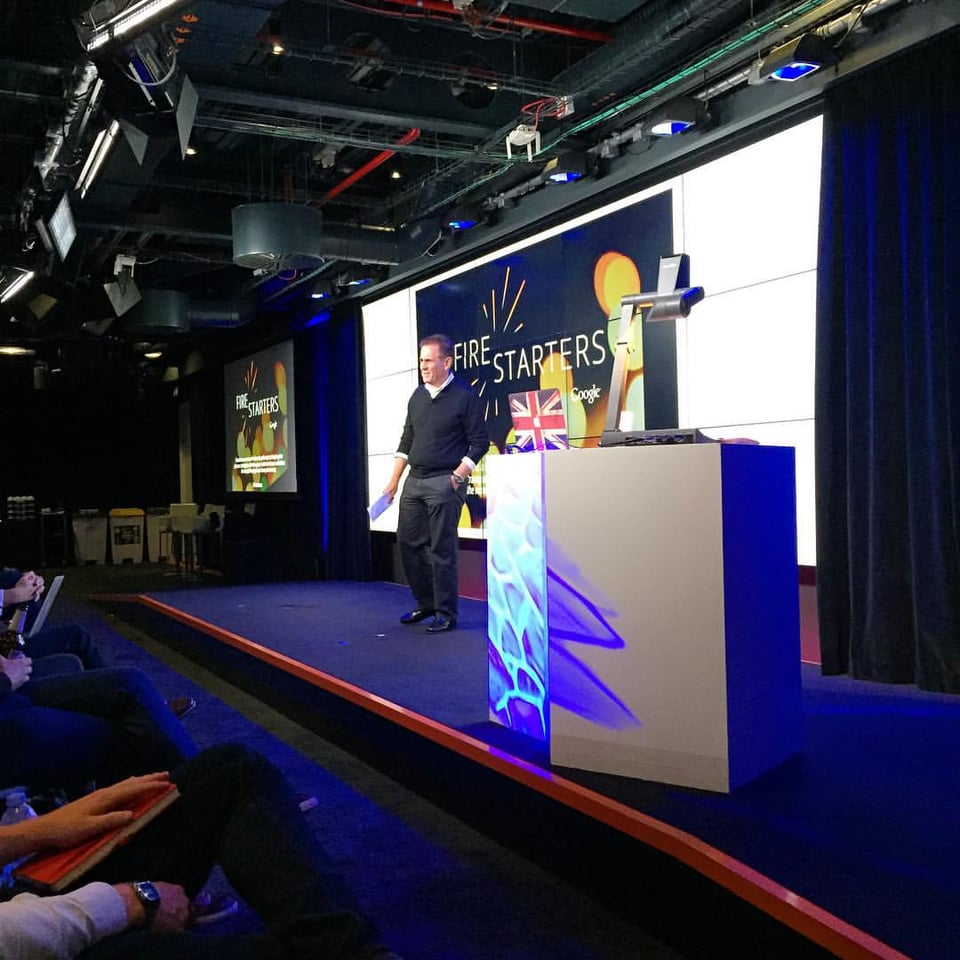
The video below says it all. The talk is called, “Simple is smart. Complicated is stupid.” Trott uses an old-school overhead projector with acetate slides to make his points. Of course he does. His presentation kit is literally a relic. It’s a relic on purpose. His medium is his message. His message is that the means of delivery is of secondary importance. What matters is having a compelling idea to deliver. New channels spring up all the time. But good ideas work always and everywhere.
I saw him do a version of this talk at Neil Perkin’s Google Firestarters event back in 2015. Trott can hold a room. He performs a stage persona version of himself and it’s a class act. He’s simply brilliant at what he does, which is keeping things brilliantly simple.
I’m sure he hates the idea of personal branding, at the same time as intuitively building one of the most distinctive personal brands out there.
The German word Gesamtkunstwerk refers to a “total work of art”; combining different forms and media that cohere and compound to create a rich, immersive whole. Wagner applied the Gesamtkunstwerk philosophy to his operas. And the idea influenced the work of architects like Frank Lloyd Wright and Walter Gropius (Bauhaus).
Whether he likes it or not, Dave Trott on LinkedIn is a personal brand Gesamtkunstwerk. Everything he does, says, writes, or refers to makes sense on its own, at the same time as building on and reinforcing everything else.
Challenger brands create enemies and monsters to position themselves against. Trott’s monster is over-complication. And his enemies are stupid marketers (his words) and pseudo-intellectual strategists (paraphrasing). Fair enough. They exist. I’ve met my share of both. They piss me off actually. They’re like the entitled, combative cyclists that give the rest a bad name.
It suits Trott’s purposes to create a dim-witted marketing stereotype and a pompous planning caricature to play himself off against. But, like all sweeping generalisations, they’re not entirely accurate. And if you’re not “one of them”, it’s entirely unfair.
I resent being tarred with Trott’s brush. And here’s why.
They know what they’re doing but they can’t tell you what they’ve done
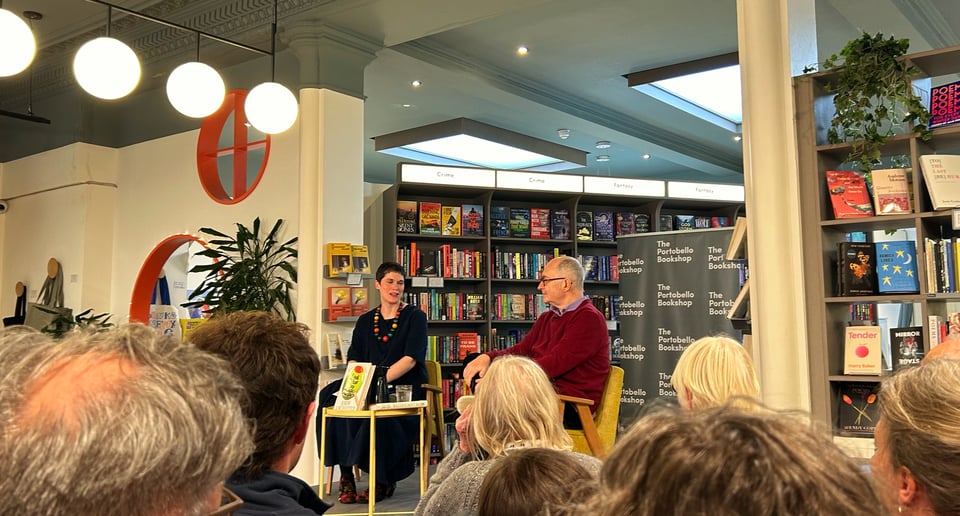
I went to see John Lanchester at my favourite independent seaside bookshop. He was promoting his latest book, called Look What You Made Me Do.
Lanchester thought he’d written a psychological thriller. But, when he sent the manuscript to his editor, they told him he’d actually written a black comedy about intergenerational tension. I’m half way through the book at the time of writing and his editor is right.
The book is Lanchester’s idea, but he needed someone else to tell him what his idea actually was.
This happens ALL THE TIME in advertising. The people who have extraordinary ideas can be extraordinarily incapable of packaging and pitching them. They can’t see their ideas for what they are. They know what they’re doing but they can’t tell you what they’ve done.
It’s partly to do with being so close to an idea that you can’t appreciate it for what it is. You know too much to discern what’s important and what’s not. You can’t read the label from inside the bottle.
It’s probably also to do with being prolific. Over-supply has a deflationary effect. When you have lots of ideas every day, you inevitably ascribe less value to each one.
But the main thing is that defining and framing ideas is a separate skill from having them, just like editing books is a different skill to writing them. Some creatives, like Trott, like all good creative directors, can do both. But, in my experience, the majority of creatives can’t, including the exceptionally talented ones. See, two can play this tar-brushing game, mwah ha ha.
When a creative team presents a TV script, they’ll often tell you the idea for the scene or the sketch in a way that relegates the brand to the passive role of sponsor. (Here’s a funny ad, brought to you by Brand X) When you describe an advertising idea, the brand should always have an active role as catalyst or protagonist. (This funny/interesting/relevant thing happens because Brand Y has effect Z.) Good planners know how to do this. And if you can’t do it, it’s because the idea doesn’t work.
More importantly, advertising creatives rarely appreciate the real commercial value in their work. They don’t see the irresistible brand idea that’s implicit in their script. That brand idea will be the difference between a one-off execution and a long-running campaign. It might also transform the client’s business from the inside out. But for some reason its authors are oblivious. A good planner will spot a rough diamond idea, see it for what it is, and refine it into something vital; the creative equivalent of enriching uranium.
Bursting with credibility and starving for views
It happens with books, it happens with ads, and it happens with film-making; creative people creating things without really knowing what they’ve created. Ian Edgar is a “filmed media strategist” and former VP of Creative Strategy & Video Programming at Condé Nast.
It’s hard. Harder than you first might think. It’s also much maligned - there’s a widely-experienced sense that clearly articulating the appeal of something cheapens the work itself.
If you actually want people to see the thing you’ve worked hard to make, you simply have to lower the barrier to entry as much as you reasonably can without affecting the meaning or integrity of the work.
I’ve lost track of the number of brilliant short docs I’ve seen which, due to lack of clear communication of their value and appeal, are bursting with credibility and starving for views.
It’s often the case that the artist that has sacrificed and been to a vulnerable place to create something may well not be the right person to choose a single image or write a 56 character summation in order to entice people.
Ian Edgar, Screen Theories, 19th January 2024
It’s one thing for a documentary director to have a vision. It’s another thing entirely to find the compact set of words that makes it feel interesting and important; worthy of attention and worthy of funding.
There’s more to working with ideas than having them.
Ideas that you can hold in your hand
Well-defined ideas win pitches. Back in the day at the Leith Agency, the head of planning, David Amers, had a slide with this quote from Steven Spielberg.
I like ideas, especially movie ideas, that you can hold in your hand. If a person can tell me the idea in twenty-five words or less, it's going to make a pretty good movie.
Steven Spielberg
If Spielberg can do it for a ninety-minute movie, there’s something wrong if you can’t do it for a thirty-second TV commercial, or a campaign, or a brand idea.
We were fanatical about ideas that you could hold in your hand. We won many pitches with them.
We won the Coors Light pitch not with twenty-five words but with two: EPIC REFRESHMENT.
There can’t be a more generic proposition than refreshment for a lager brand. But, as shown by Heineken, a well-defined idea can make any proposition your own.
Epic Refreshment built a bridge between the brand’s high-mountain provenance (Golden, Colorado) and the aspirations of (legally) young drinkers. However, the Epic Refreshment scripts were 7/10 at best. And we’d developed a second campaign based on the brand’s heritage and its nickname, The Silver Bullet. The scripts for that campaign would have been better television. But Epic Refreshment was a compleat brand idea. It made sense of the brand, put a spring in the client’s step, and gave them a hard-working, commercial idea that could be activated in all the on- and off-trade channels; in just two words.
The EPIC REFRESHMENT line came from a creative team (can’t remember which one), but realising and selling its potential as a brand idea, and choosing to pitch a brand idea over a more satisfying set of scripts, was a team effort, which wouldn’t have worked without planning.
That’s one of the good things that good planners do. They impose infectious clarity, strategic rigour, and commercial discipline on raw ideas.
Again, having an idea and packaging an idea are different skills that often belong to different people.
Living in harmony, with a friendly enemy
I’d say I’m an ideas person. I have to be. A strategy is an idea by another name. Strategy is an idea for what a brand or a business could be.
But commercial creativity - advertising, design, copywriting, book writing, filmmaking - is something else. Its practitioners, the best ones, operate on a different plane. They take you to places beyond your imagination. It’s their job to have the ideas. It’s tempting to think that anyone can do it, but the best ones, they’re way better than you.
In an agency, the planner’s job is to give these alien beings something juicy and interesting to work with going in. And, coming out, it’s your job to know good when you see it and to express that goodness with good words. The secret to being a useful planner, the kind that Dave Trott doesn’t slag off, is to know your stuff but also to know your place. Useful beats clever every time.
Maybe it’s inevitable, perhaps even essential, that there’s professional tension between advertising creatives and advertising planners. People are possessive and protective with ideas, especially when ideas are their identity. Dave Trott just plays to that tension sometimes for the gallery. But it only works when the tension is balanced by trust; the kind of trust that John Lanchester has in his editor.
If I’m a creative and you’re the planner, or if I’m a writer and you’re my editor, and you’re going to assume an intellectual stake in my ideas, I need to trust your motives. I need to know that you only care about making the work better and about getting it made. And I need to know that you won’t take the credit.
At this point, my thoughts turn, inevitably, to Cloppa Castle. And if, like me, you’re a child of the Seventies, you know where I’m going with this.
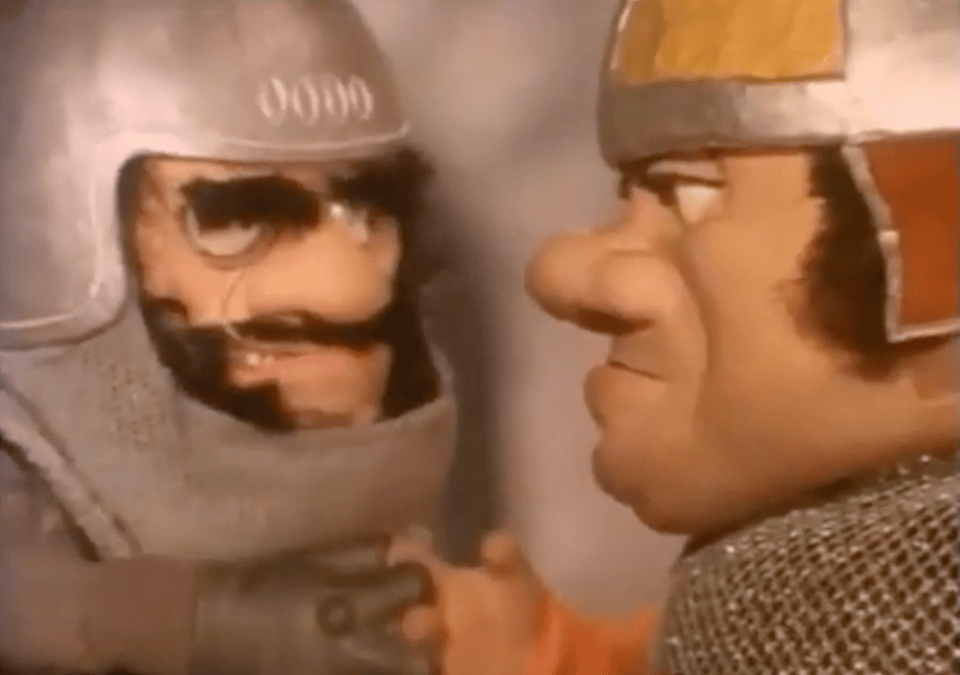
Cloppa Castle was created by a couple of Gerry Anderson puppeteer protégés. It tells the story of warring clans, the Byegones and the Hasbeenes. It’s a cordial rivalry, the kind that each side depends on to define themselves, although they’d never admit it. They needle each other but they need each other too. As such, Cloppa Castle is an exemplar, a blueprint, a role model for turning interdisciplinary tension into productive cooperation. Its message is important for the creative industries, but also for our times. And it delivers it, not with an overhead projector and acetate slides, but in song: “living in harmony, with a friendly enemy…” 🎶
-
Great read, Phil. I've never heard of Cloppa Castle but I instantly recognise the value in interdisciplinary tension for good. Thank you.
-
Thanks Nathan, for making it to the end if nothing else.
Add a comment: